How to Grow a YouTube Channel from Zero?
how to grow a YouTube channel from zero with practical tips on video ideas, keywords, thumbnails, subscribers, analytics, and monetization.
Can You Really Grow a YouTube Channel from Zero?
Yes. Every YouTube channel begins without an audience, and a new creator can earn viewers by making videos that answer a question, solve a problem, or offer an experience people enjoy.
What you cannot do is guarantee how quickly that will happen. Some videos find an audience early; others need several rounds of improvement. The goal is not to discover a secret trick, but to understand a particular group of viewers and get better at serving them.
This guide explains how to grow a YouTube channel from zero, from choosing your first topic to reading your analytics. You do not need expensive equipment or a perfect plan. You do need a reason for someone to choose your video—and a reason to come back for another.
Choose the Right YouTube Niche Before Starting
A niche is the general subject and audience your channel focuses on. “Cooking” is a broad category; “simple vegetarian dinners for people with little time” gives viewers a clearer idea of what they will get.
A useful niche sits at the intersection of four things:
- Audience interest: Are people already asking questions or watching videos about it?
- Your knowledge or curiosity: Can you teach it responsibly, document your learning, or explore it with genuine interest?
- Competition: What do existing creators cover well, and where could your perspective add something?
- Long-term opportunities: Can you think of enough related topics to make more than a handful of videos?
Competition is not automatically a bad sign. Established channels can show that an audience exists. Instead of copying their videos, look for a different viewer, format, level of detail, or practical constraint you can address.
Before committing, write down 20 possible video ideas. If you struggle to reach that number, broaden the niche slightly. If the list covers unrelated subjects, narrow it until the same person would reasonably be interested in several ideas.
For context, the YouTube Channel Statistics tool lets you review public channel data. Compare channels of similar age and subject, and remember that public numbers do not reveal another creator’s private watch time or audience data.
Understand Your Target Audience
“Everyone who likes technology” is difficult to make a specific video for. “Students choosing their first affordable laptop” gives you a clearer starting point.
Describe one typical viewer in a sentence: who they are, what they want, and what makes it difficult. For example: “A busy beginner wants to cook inexpensive lunches but has only 20 minutes and a small kitchen.”
Then ask:
- What are they trying to do or understand?
- What have they already tried?
- Which words do they use to describe the problem?
- What would make a video worth watching for them?
Use this description as a working hypothesis, not a permanent rule. Comments, search results, and your own analytics can show you that your actual viewers have different needs.
Find YouTube Video Ideas People Actually Want to Watch
Start with questions rather than formats. A viewer looking for “why does my bread stay flat?” has a more specific need than someone looking for “bread content.”
- Explore YouTube search suggestions. Begin typing a topic and record relevant completions. These are ideas to investigate, not exact measures of demand.
- Study existing videos. Notice which questions are answered, what viewers praise, and where comments reveal confusion. Compare videos published at similar times when possible.
- Collect audience questions. Look at questions in relevant communities, customer conversations, and comments. Do not post links where self-promotion is unwelcome.
- Watch for relevant trends. Consider a new game update or device release only when you can contribute something useful to your audience.
- Build a series. Turn one broad problem into several focused videos that naturally connect.
For an educational channel, a series might cover fractions through cooking measurements. A gaming channel could explain one difficult level, then explore a beginner-friendly strategy. An entertainment creator might document a challenge with a clear setup, obstacles, and outcome.
When researching competitors, study the problem and presentation—not their script, footage, or distinctive jokes. Your own examples, testing, and explanation are what make the video worth watching.
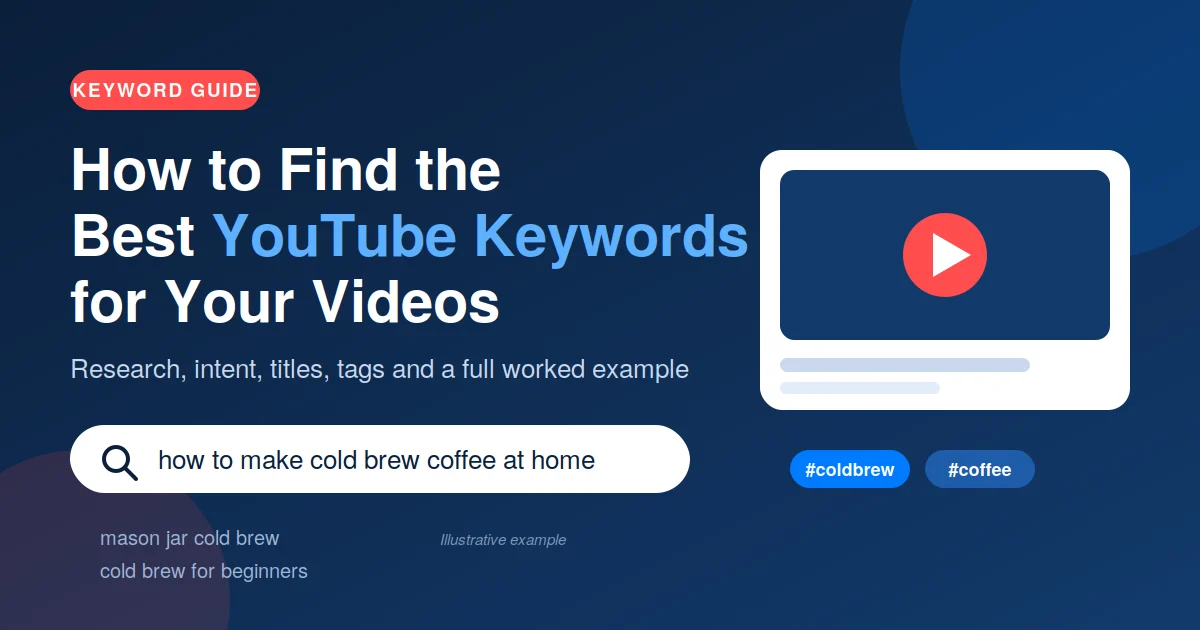
Research Keywords Before Creating Videos
A keyword is a word or phrase that describes a topic or a search, such as “fix a slow laptop.” Search volume is an estimate or indication of how often a phrase is searched over a period. A keyword is not itself a volume figure, and a suggestion in YouTube’s search box does not tell you the number of searches.
For each idea, write down the phrase a viewer might use and ask what they expect to find. Someone searching “laptop won’t charge” probably wants troubleshooting steps, not a general review of a new model.
Choose a phrase that matches your video, inspect the existing results, and decide whether you can offer a useful answer. A specific topic can be a sensible place to start, even when a broader phrase appears more popular. Third-party volume figures are estimates, so compare their methods and avoid treating them as guarantees.
YouTube says its search system considers relevance, engagement, and quality; how well a video’s information and content match a search is one part of that assessment. Read YouTube’s explanation of how search works and explore our guide to finding YouTube keywords for a deeper research process.
Create a YouTube Channel That Looks Professional
Professional does not mean expensive. It means that a visitor can quickly understand who you help and what they can expect.
- Choose a recognizable name and handle. Aim for something easy to remember and appropriate for your subject.
- Add a clear profile image and banner. They should remain readable on different screen sizes and reflect your channel’s identity.
- Write a useful channel description. Say what you cover, who it is for, and why it matters.
- Organize related videos. As your library grows, group useful videos into playlists so viewers can find the next step.
- Check your account settings. Follow YouTube’s verification and feature-access instructions for the tools you want to use.
Do not spend weeks polishing a banner while postponing your first upload. A clear channel with useful videos is more valuable than a beautiful channel with nothing to watch.
How to Make Videos That Keep Viewers Watching
Good retention starts before you press record. Decide what the viewer should gain, then remove material that does not help deliver it.
Open with the reason to stay
In the first moments, show the result, name the problem, or introduce the question. A cooking tutorial might show the finished dish and explain that it uses one pan. A gaming video might show the challenge and its rules before the first attempt.
Skip a long introduction if the viewer came for an answer. You can introduce yourself briefly once the viewer understands why the video matters.
Make the middle easy to follow
Outline a beginning, a sequence of useful steps or story beats, and an ending. In a software tutorial, show the screen clearly, demonstrate each action, and explain what to do if a common error appears. In an educational video, work through an example before moving to a harder one.
Use clean audio, adequate light, and readable visuals. A phone and a quiet room can be enough to start. Add captions, on-screen labels, or close-up shots when they help viewers understand—not simply to make the edit feel busy.
At the end, suggest a genuinely relevant next video. Review YouTube’s audience retention guidance after publishing to see where viewers tend to leave, skip, or rewatch. Those moments are clues to investigate, not a verdict on your ability.
Write Click-Worthy YouTube Titles Without Clickbait
A strong title makes the subject clear and gives the right viewer a reason to care. It should set an expectation the video actually fulfills.
For example, “My Laptop Video” says very little. “Budget Laptop Test: Can It Edit Photos?” tells viewers what is being tested and why. If the video does not test photo editing, however, that title would be misleading.
Draft several options: a straightforward how-to, a specific outcome, and a question. Put the most useful information near the beginning, since titles may be shortened on smaller screens. Use natural wording instead of repeating the same keyword.
For brainstorming, try the YouTube Title Generator, then edit any suggestion to match your actual video. Our guide to writing catchy YouTube titles offers more examples.
Create Attractive YouTube Thumbnails
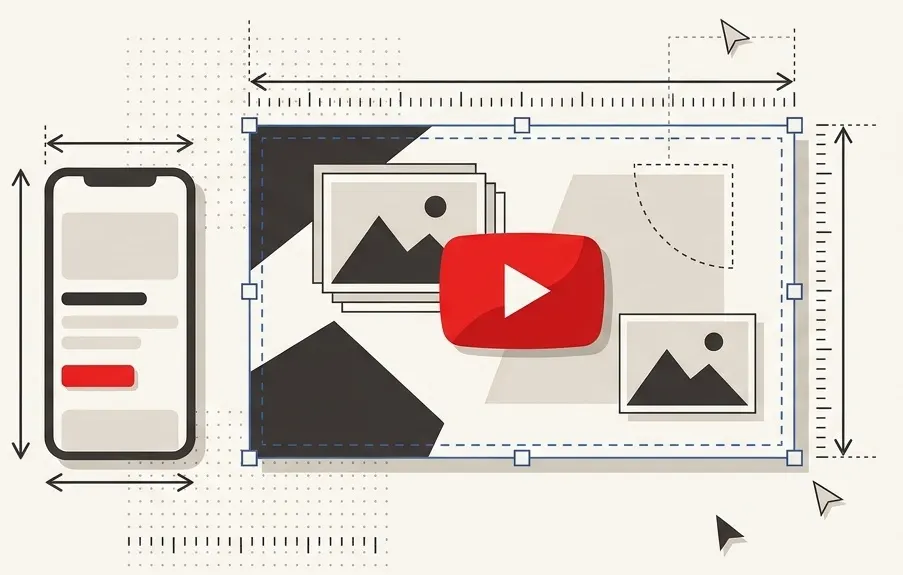
A thumbnail is the small preview image viewers see in many places on YouTube. Think of it as a companion to the title: together they should communicate one clear idea.
For a gardening tutorial, a close-up of a wilted plant beside a healthy one could illustrate the problem and result—provided the video shows both honestly. For a technology review, a clear image of the product and one relevant detail may be more useful than a crowded collage.
Use a recognizable subject, readable contrast, and only as much text as the image needs. Preview the design at a small size. Avoid tiny labels, unrelated images, or dramatic claims that the video cannot support.
Format requirements and options can change, so check current YouTube guidance before exporting. Our YouTube thumbnail size guide covers dimensions and practical design considerations.
Optimize Your Video Descriptions, Tags, and Hashtags
Your description should help someone understand the video and find useful next steps. Begin with a concise, accurate summary, then add relevant resources, credits, or chapters when appropriate.
For example: “Learn how to organize a small kitchen drawer using dividers and containers you already have. Below are the measurements and materials shown in the video.” A YouTube Description Generator can help you start a draft, but check every detail and add your own relevant information.
Tags and hashtags are different. Tags are descriptive terms added in YouTube Studio; hashtags are visible phrases beginning with # that can be placed in a title or description. Use only terms that accurately relate to the video.
According to YouTube’s guidance on tags, the title, thumbnail, and description are more important for discovery; tags can be useful for commonly misspelled subjects. A YouTube Tag Generator can suggest possible variations, but do not expect a tag list to compensate for an unclear or unhelpful video. Avoid irrelevant hashtags and keyword stuffing.
How Often Should Beginners Upload on YouTube?
There is no universal number of uploads that guarantees growth. Choose a schedule you can sustain while making videos you are proud to share. For one beginner, that might be one useful long-form video every two weeks; another may be able to publish weekly.
Try a simple four-week plan: research several ideas, outline two, record in batches if that helps, and leave time to edit and review results. If a schedule consistently causes rushed work or burnout, reduce it.
Use Shorts and long-form videos with a purpose
Shorts can introduce a focused idea, quick demonstration, or entertaining moment. Longer videos give you more room for a detailed explanation, comparison, or story. You can use both, but each should work for the person watching it.
A cooking channel might make a Short showing how to keep herbs fresh and a longer video about planning a week of meals. Mention the longer video only if it is relevant; a Short that attracts views does not automatically turn those viewers into long-form viewers or subscribers.
How to Get Your First 100 and 1,000 Subscribers
Subscribers are people who chose to follow your channel. The most useful question is not “How do I get a number?” but “Why would someone want another video from me?”
For your first 100 subscribers, focus on a small group of closely related videos. Answer comments thoughtfully, ask a specific question at the end of a video, and share your work with people or communities where it is genuinely relevant and permitted. An occasional invitation to subscribe is reasonable; tell viewers what they can expect next.
To work toward your first 1,000 subscribers, look for patterns across your uploads. If a beginner spreadsheet tutorial attracts questions about budgets, make a follow-up that answers one of them. Link related videos and build a library that makes sense to the same audience.
Avoid buying subscribers or views, using engagement-exchange schemes, or spamming links. YouTube prohibits artificially inflated engagement and “sub4sub” arrangements under its fake engagement policy. Such shortcuts do not replace a real audience.
Use YouTube Analytics to Understand Your Growth
YouTube Studio provides data about your own channel and videos. Review it regularly, but do not draw strong conclusions from a handful of views. Different topics and traffic sources can produce very different results.
| Metric | What it means | How to use it |
|---|---|---|
| Impressions | How often YouTube counted an eligible display of a video’s thumbnail. | Check whether people are seeing the video on YouTube; not every view comes from a counted impression. |
| Impressions click-through rate (CTR) | How often a counted thumbnail impression led to a view. | Compare similar videos and traffic sources; consider whether the title and thumbnail communicate the topic clearly. |
| Watch time | The total time viewers spend watching. | Use it with views and retention to understand how much viewing a video generates. |
| Audience retention | How viewing changes across a video. | Inspect dips, spikes, and the opening for possible improvements. |
| Returning viewers | People who watched your channel before and returned during the selected period. | Look for topics or series that give viewers a reason to come back. |
| Subscribers gained | People who subscribed during the selected period or from a particular video, where reported. | Notice which videos bring in viewers who want more of your work. |
Suppose a tutorial receives impressions but few clicks. Check whether its title and thumbnail make the benefit obvious. If people click but many leave near the beginning, compare the opening with the promise you made. Neither pattern proves a single cause, so change one thing at a time when practical and keep learning.
Common Mistakes That Stop New YouTube Channels from Growing
- Making unrelated videos for unrelated viewers: Experiment, but give a newcomer a reason to expect more content they will enjoy.
- Copying successful creators: Learn from their structure and audience questions, then bring your own examples and perspective.
- Overpromising: A misleading title or thumbnail may attract the wrong audience and damage trust.
- Ignoring the first minute: A slow or confusing opening can make viewers leave before the useful part begins.
- Focusing only on metadata: Tags and descriptions cannot make an irrelevant video useful.
- Using content without the necessary rights: Check permissions for music, footage, and images, and understand YouTube’s copyright and monetization rules.
- Changing direction after every upload: Give a coherent set of ideas enough time to produce meaningful feedback.
How Long Does It Take to Grow a YouTube Channel?
There is no reliable timetable. A channel may find an audience in months, take years to reach a milestone, or never reach it. Topic, production capacity, competition, audience response, and many other factors differ from channel to channel.
Set goals you can control alongside outcomes you hope to achieve. For the next eight weeks, you might publish four thoughtful videos, test clearer openings, and review the questions viewers ask. At the end, examine which topics attracted the right viewers and what you learned about making them better.
Use other channels for perspective, not as a deadline. A visible success rarely shows all the work, previous experience, or unsuccessful videos behind it.
Can a New YouTube Channel Get Monetized?
Yes, a new channel can eventually apply for the YouTube Partner Program (YPP), but meeting a threshold does not guarantee approval. YouTube reviews the channel for compliance with its policies, and availability and individual features vary by country or region.
As of November 2026, the published thresholds are:
- Earlier access to eligible fan funding and selected Shopping features: In eligible countries or regions, 500 subscribers, three valid public uploads in the last 90 days, and either 3,000 qualified public watch hours in the last 12 months or 3 million qualified public Shorts views in the last 90 days.
- Ads and YouTube Premium revenue sharing: 1,000 subscribers and either 4,000 qualified public watch hours in the last 12 months or 10 million qualified public Shorts views in the last 90 days.
Watch time from Shorts views in the Shorts Feed does not count toward the 4,000-hour threshold. YouTube also requires other conditions, including a supported location, no active Community Guidelines strikes, two-step verification, advanced features access, and an eligible linked AdSense for YouTube account. See the official YPP eligibility guide and expanded YPP guide for details.
Looking ahead: YouTube has announced that, starting February 1, 2027, the ads and Premium entry thresholds for new creators will change to 1,000 subscribers plus either 8,000 qualified watch hours in the past 365 days or 20 million qualified Shorts views in the past 90 days. Check YouTube’s announced YPP changes and the Earn tab in Studio for the latest requirements.
Beyond YPP, some creators explore relevant products, services, or sponsorships, but those are not automatic income sources. Be transparent about commercial relationships and focus first on earning your audience’s trust.
Frequently Asked Questions
Can I grow a YouTube channel from zero subscribers?
Yes. Start with a specific audience and publish videos that give that audience a clear reason to watch. Growth is possible, but the pace and outcome are not guaranteed.
How do I get my first 100 subscribers?
Make a small collection of related videos, respond to genuine questions, and invite interested viewers to subscribe for a clear reason. Share your work only where it is relevant and allowed.
How long does it take to reach 1,000 YouTube subscribers?
There is no fixed timeline. Some channels reach the milestone relatively quickly, while others take much longer or do not reach it. Track what you learn and improve rather than relying on a deadline.
How many videos should a beginner upload per week?
There is no required weekly number. Start with a manageable schedule—even one video every two weeks—and adjust it based on your time and the quality you can maintain.
Are YouTube Shorts good for growing a new channel?
They can help you reach viewers with concise ideas or entertaining moments. Their usefulness depends on whether they appeal to the audience you want and fit your broader content plan.
Do YouTube tags help a new channel grow?
Tags have a limited supporting role and can help with commonly misspelled terms. YouTube says titles, thumbnails, and descriptions are more important for discovery.
Can I grow a YouTube channel without showing my face?
Yes. Screen recordings, demonstrations, animation, voiceovers, and hands-only videos can all communicate value. Make the content original, clear, and appropriate for the audience.
When can a new YouTube channel start earning money?
Some creators may earn outside YPP through suitable business arrangements. For YouTube’s monetization features, eligibility depends on the feature, location, thresholds, and policy review. Check the Earn tab and current official guidance before making plans.
Final Thoughts: Build a Channel That Grows Over Time
Learning how to grow a YouTube channel from zero is a process of making useful promises, delivering on them, and listening to what happens next. Pick a viewer you understand, create a focused first video, and use each upload to improve one part of your process.
You do not need to master every YouTube growth strategy before you begin. Start with a topic you can serve well, make the next video a little clearer, and build a library that gives the right people a reason to return.

Ahassan
CEO / Co-Founder
Hello, I'm A Hassan, the owner of YTLargeTools. I created YTLargeTools with a simple goal: to make useful online tools accessible to everyone. I believe everyday tasks should be simple, convenient and easy to complete without unnecessary complications.
Recent Posts