YouTube Monetization Requirements in 2027
YouTube monetization requirements for 2027, including YPP thresholds, Shorts rules, channel review, AdSense setup, and how to apply.
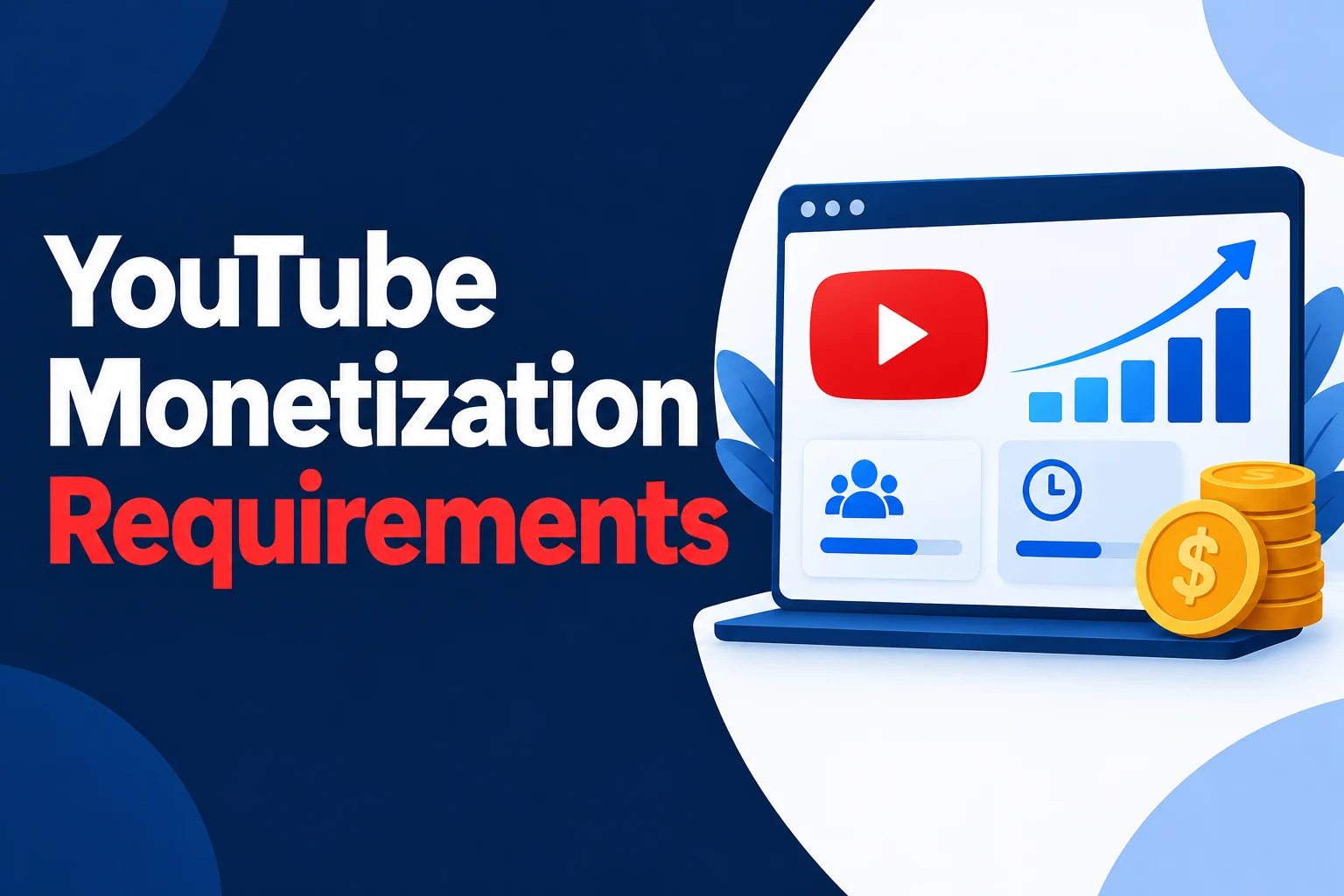
Getting your first YouTube payment starts with more than reaching a subscriber milestone. You need an eligible channel, content that follows YouTube’s policies, an approved application, and the right payment setup.
The YouTube monetization requirements for 2027 also depend on when you apply and which earning features you want to use. YouTube has announced changes taking effect on February 1, 2027, including higher entry thresholds for advertising and Premium revenue for new creators.
This guide explains the announced requirements, what counts toward your progress, how the review works, and what you can do to build a channel that is ready to apply.
Policy check: This article reflects official YouTube information available on November 4, 2026. Requirements and feature availability can change. Check the Earn tab in YouTube Studio and the linked YouTube Help pages before applying.
What Is YouTube Monetization?
YouTube monetization means earning money from the audience and content you build on YouTube. Depending on your eligibility, that can include a share of advertising revenue, YouTube Premium revenue, channel memberships, viewer contributions, and Shopping features.
Some creators also earn outside YouTube’s built-in tools through sponsorships, affiliate links, or their own products and services. Those arrangements have their own rules and do not automatically require acceptance into the YouTube Partner Program.
There is no guaranteed income. A channel’s earnings depend on factors such as its audience, content, available features, advertiser demand, and whether its videos are eligible for monetization.
What Is the YouTube Partner Program?
The YouTube Partner Program, or YPP, gives eligible creators access to monetization features and creator support. Different features have different requirements, and availability varies by country or region.
Think of YPP eligibility as a two-part process:
- Meet the entry requirements: Reach the relevant subscriber and performance thresholds and satisfy the basic account requirements.
- Pass YouTube’s review: YouTube reviews your channel as a whole to determine whether it follows its monetization policies.
Reaching the numbers makes you eligible to apply. It does not guarantee approval, and approval for an early-access feature does not automatically mean you qualify for advertising revenue.
YouTube Monetization Requirements in 2027
YouTube has announced that, starting February 1, 2027, new creators seeking advertising and YouTube Premium revenue will need higher watch-hour or Shorts-view totals. The lower entry level for eligible fan-funding and Shopping features remains unchanged.
| Eligibility level | Subscribers | Performance requirement | What it can unlock |
|---|---|---|---|
| Early YPP access, where available | 500 | 3 valid public uploads in the last 90 days and either 3,000 qualified public watch hours in the last 12 months or 3 million qualified public Shorts views in the last 90 days | Eligible fan-funding and Shopping features, subject to their individual requirements |
| Advertising and Premium entry before February 1, 2027 | 1,000 | Either 4,000 qualified public watch hours in the last 12 months or 10 million qualified public Shorts views in the last 90 days | Potential access to ad and Premium revenue sharing after approval and acceptance of applicable terms |
| Advertising and Premium entry for new creators from February 1, 2027 | 1,000 | Either 8,000 qualified public watch hours in the last 365 days or 20 million qualified public Shorts views in the last 90 days | Potential access to ad and Premium revenue sharing after approval and acceptance of applicable terms |
Important: YouTube says existing YPP members’ status is not affected by the new entry thresholds. That statement should not be interpreted as a promise that every early-access member automatically receives advertising access. Check your channel’s Earn tab for the requirements and options that apply to you.
The early-access level is available only in participating countries and regions. Individual features can also have additional age, location, content, and account requirements. See YouTube’s expanded YPP overview and its announcement of the 2027 changes.
You may still encounter the earlier 4,000-hour and 10-million-view figures on general YouTube Help pages. Those figures describe the earlier advertising-entry thresholds; use the announced February 1 change and your current Studio eligibility information when planning for 2027.
How many subscribers do you need to monetize YouTube?
At the early YPP level, an eligible creator can apply with 500 subscribers plus the upload and performance requirements. The advertising and Premium revenue entry level requires 1,000 subscribers plus the applicable watch-hour or Shorts-view requirement.
Subscribers alone do not unlock either level. For example, a channel with 2,000 subscribers but insufficient qualifying watch hours or Shorts views has not yet met the advertising-entry threshold.
Public Watch Hours: What Counts?
Qualified public watch hours generally come from viewers watching your public long-form videos. The relevant total is measured over a rolling 12-month or 365-day period, depending on the requirement being described. It is not your channel’s lifetime watch time.
YouTube says the following do not count toward YPP watch-hour thresholds:
- Watch time from private, unlisted, or deleted videos.
- Watch time generated through ad campaigns.
- Watch time from Shorts views in the Shorts Feed.
- Watch time from livestreams that are unlisted, deleted, or not converted to video on demand.
A public livestream that remains available as a public replay may contribute qualifying watch time, provided it meets YouTube’s other requirements. For the definitive count, use the Earn tab rather than assuming every hour in Analytics is eligible. YouTube explains the exclusions in its YPP eligibility guide.
Example: A practical path to 8,000 watch hours
Imagine your public long-form videos receive a combined 120,000 eligible views during a 365-day period. If viewers watch an average of four minutes per view, the calculation is:
120,000 views × 4 minutes ÷ 60 = 8,000 watch hours.
This is an illustration, not a forecast. Your actual qualifying hours can differ from a simple Analytics calculation. You would still need 1,000 subscribers, the other account requirements, and YouTube’s approval.
To improve your chances, focus on videos that answer a clear question and keep delivering useful information after the introduction. Our guide to increasing YouTube watch time covers ways to make videos more engaging without stretching them unnecessarily.
What happened to the 4,000 watch-hour requirement?
The familiar 4,000-hour figure remains the earlier advertising-entry requirement through January 2027, according to the currently published overview. YouTube’s announced requirement for new creators changes to 8,000 qualified watch hours in the past 365 days on February 1, 2027. The early-access level remains at 3,000 qualifying hours, alongside its other requirements.
YouTube Shorts Monetization Requirements
Shorts offer a separate eligibility route. For the early YPP level in participating regions, the performance option is 3 million qualified public Shorts views in 90 days, along with 500 subscribers and three valid public uploads in the same 90-day period.
For new creators seeking advertising and Premium entry, the announced Shorts route becomes 20 million qualified public Shorts views in 90 days, plus 1,000 subscribers, starting February 1, 2027.
Example: The Shorts route
Suppose a creator has 1,200 subscribers and their public Shorts receive 20.5 million qualified Shorts views during a single rolling 90-day period after the new threshold takes effect. The creator may meet the numerical advertising-entry requirement through Shorts.
That does not establish that the channel will be approved. YouTube still checks the account requirements and reviews the channel. Also, a lifetime total of 20.5 million views would not meet a 90-day requirement unless those views fall within the relevant window.
For ideas on improving your Shorts content, see our guide to getting more views on YouTube Shorts.
Do Shorts views count toward 4,000 or 8,000 watch hours?
No. Watch time from Shorts viewed in the Shorts Feed does not count toward the public long-form watch-hour route. YouTube measures the Shorts route using qualified Shorts views instead.
A Short can help a new viewer discover your channel and later watch a long-form video. Qualifying watch time from that separate public long-form video may count toward the watch-hour route—but the Shorts Feed watch time itself does not.
Public views are not always qualified Shorts views
YouTube counts qualified views from public Shorts appearing in the Shorts Feed for the eligibility threshold. Views from private, unlisted, or deleted Shorts, ad campaigns, and image posts appearing in the Shorts Feed do not count toward that threshold.
Also, the views used to determine eligibility are not necessarily identical to the eligible engaged views used to calculate a Shorts payment. Artificial views and views of ineligible content can be excluded. Check the Earn tab and YouTube’s Shorts monetization policies rather than relying on the public view counter alone.
Other Requirements Before You Apply
Alongside the numerical thresholds, YouTube’s general YPP requirements include the following:
- Follow YouTube’s channel monetization policies.
- Live in a country or region where YPP is available.
- Have no active Community Guidelines strikes when applying.
- Turn on two-step verification for your Google Account.
- Have access to YouTube advanced features.
- Link one active AdSense for YouTube account, or be ready to set one up through YouTube Studio.
Feature access may also depend on age, location, channel settings, and other conditions. The official YPP overview and your Studio Earn tab are the best starting points for your account.
YouTube Monetization Policies and Channel Review
YouTube uses automated systems and human reviewers to assess a channel as a whole. Reviewers may examine your main topic, most-viewed and newest videos, the content responsible for the largest share of watch time, video metadata, and your channel’s About section.
The question is not simply, “Did this video get views?” It is also, “Does this channel show original, authentic work and follow the applicable policies?”
Original, reused, and inauthentic content
Reused content generally means republishing material from YouTube or another source without adding significant original commentary, substantive changes, or meaningful educational or entertainment value.
For example, a compilation of other creators’ clips with little explanation can create a monetization problem. A critical review that uses clips to support substantial original analysis may be eligible under the reused-content policy, although copyright rules still apply.
Inauthentic content includes repetitive or mass-produced material that offers little meaningful variation or value. A familiar intro across a series is not the issue; a channel full of near-identical videos with minimal original substance can be.
Permission to use someone else’s material does not automatically satisfy YouTube’s reused-content policy. Likewise, adding a few captions or changing playback speed does not necessarily make a video sufficiently original. Review YouTube’s channel monetization policies for examples.
Community Guidelines, copyright, and advertiser-friendly content
- Community Guidelines: Follow the platform’s rules across your content and channel. An active Community Guidelines strike prevents a YPP application.
- Copyright: Use material you own or have the necessary rights to use. A copyright claim and a copyright strike are different issues, but both deserve attention. A license does not automatically settle every monetization-policy question.
- Advertiser-friendly guidelines: A channel can be accepted into YPP while an individual video receives limited or no ads because of its content or other restrictions.
For example, a video may remain available on YouTube but have limited advertising. Channel-level approval is not a promise that every upload will receive full ad revenue.
Can AI-generated content be monetized?
Using AI tools does not automatically disqualify a channel. What matters is the resulting content, how it was made, and whether it follows YouTube’s policies. Original research, meaningful commentary, a distinctive creative approach, and appropriate rights still matter.
Mass-produced videos built from generic, interchangeable templates can violate YouTube’s inauthentic-content policy. YouTube also identifies AI personas presenting themselves as human experts giving advice on sensitive topics—such as health, finance, law, or politics—as ineligible for monetization under its channel policies.
When required, disclose realistic altered or synthetic content during upload. YouTube says that disclosure alone does not affect a video’s eligibility to earn money. Read its AI-content disclosure guidance for the current rules.
How to Check Your YouTube Monetization Eligibility
- Sign in to YouTube Studio.
- Select Earn from the menu.
- Review the eligibility progress and any available application steps.
- If you are not eligible yet, select Get notified if the option is available.
- Check the tab again as your channel grows or YouTube’s requirements change.
Use this page as your working checklist. It is especially useful because qualifying performance figures can differ from public view counts and general Analytics totals.
Channel Checklist Before Applying
- Confirm that your country or region supports the YPP level you want.
- Check your subscribers and qualifying watch hours or Shorts views in Studio.
- For early access, confirm that you have three valid public uploads in the last 90 days.
- Turn on two-step verification and confirm access to advanced features.
- Resolve any active Community Guidelines strike before applying.
- Review your most-viewed videos, recent uploads, descriptions, thumbnails, and About section.
- Check that your videos show clear original contribution and that you have the necessary rights to third-party material.
- Identify an existing AdSense account if you have one; avoid creating a duplicate.
How to Apply for the YouTube Partner Program
- Open YouTube Studio. Sign in with the account that manages your channel.
- Go to Earn. Check that the application option is available for the level you have reached.
- Select Apply Now. Review and accept the YPP base terms.
- Connect AdSense for YouTube. Link an existing active account or create a new one through YouTube Studio.
- Wait for review. Once the required steps are complete, Studio should show that the review is in progress.
- Choose eligible earning features after approval. Review and accept the relevant module terms, then enable available features and video monetization settings as appropriate.
Example: Applying for early access
A creator in an eligible country reaches 650 subscribers, publishes three valid public videos within 90 days, and sees 3,200 qualified public watch hours in Studio over the relevant 12 months. They select Apply Now, accept the base terms, and link an active AdSense for YouTube account.
The channel then enters review. If approved and the creator meets individual feature requirements, eligible fan-funding or Shopping options may become available. The creator has not automatically qualified for advertising revenue merely by entering at this level.
AdSense for YouTube: Setup and Payment Requirements
AdSense for YouTube is Google’s payment system for YPP creators. You need an active linked account as part of the application process.
If you already have an eligible AdSense or AdSense for YouTube account, follow Studio’s linking instructions. YouTube allows only one account under the same payee name, so creating a second account can cause problems. If you need a new AdSense for YouTube account, create it inside YouTube Studio.
To receive payment, you may need to complete identity and address verification, provide tax information, select an available payment method, and reach the payment threshold for your currency. For example, YouTube gives $100 as a payment-threshold example for a U.S.-dollar account; thresholds vary by currency.
AdSense generally requires the account holder to be at least 18. A creator under 18 can have a parent or legal guardian over 18 handle payments through an approved AdSense for YouTube account, subject to the applicable requirements. See the AdSense for YouTube guide and feature requirements.
YouTube says finalized earnings are generally added to the YouTube payments account between the 7th and 12th of the following month. Payment is generally issued between the 21st and 26th if the threshold has been met and there are no payment holds.
How YouTubers Earn Money
Advertising and YouTube Premium
Eligible creators can earn a share of revenue from ads shown with qualifying content and from eligible YouTube Premium viewing. You must meet the relevant requirements and accept the applicable monetization terms.
Not every view produces an ad or the same amount of revenue. Viewer location, advertiser demand, content suitability, ad formats, and other factors can affect earnings. YouTube may also display ads on videos from channels that are not eligible for a revenue share.
CPM describes an advertiser-side cost measure, while RPM is a creator-side measure of revenue per 1,000 views. They are not interchangeable. Our guide to YouTube CPM vs. RPM explains the distinction.
For a closer look at potential earnings and their limitations, read how much YouTube pays for 1,000 views. A YouTube money calculator can help illustrate scenarios, but an estimate is not a promise of actual income.
How Shorts revenue sharing works
Ads shown between videos in the Shorts Feed contribute to a shared revenue pool. YouTube allocates revenue using eligible engaged views and other factors, including country and music licensing. Monetizing creators keep 45% of their allocated Creator Pool revenue under the published model.
Creators must accept the Shorts Monetization Module. Views accrued before accepting it are not eligible for Shorts ad revenue sharing.
New monthly requirement from February 1, 2027: To earn a share of Shorts Creator Pool advertising and Shorts Premium revenue for a month, YouTube says a creator must have at least 10 million qualified Shorts views in the preceding 90-day measurement period. YouTube measures that period through the 15th day of the calendar month before the earnings month.
This is separate from the 20 million views in 90 days announced as an advertising-entry route for new creators. Missing the monthly 10-million-view requirement does not, by itself, remove a creator from YPP or affect other YPP earnings, including long-form earnings. See the official Shorts policy for calculation details.
Memberships, Supers, and Shopping
- Channel memberships: Eligible viewers pay a recurring amount for available member perks.
- Super Chat and Super Stickers: Eligible viewers purchase highlighted messages or animated stickers during supported live experiences.
- Super Thanks: Eligible viewers can support creators on supported videos.
- Shopping: Eligible creators may connect a store or promote eligible products, depending on the program and their location.
Each feature has its own requirements and may not be available to every approved channel. Review the applicable terms in Studio before enabling one.
Sponsorships, affiliates, and your own products
Some creators work directly with brands, recommend products through affiliate links, or sell services and products. These options can complement YPP, but disclose paid promotions and affiliate relationships when required, follow YouTube’s rules, and avoid recommending products solely because they pay a commission.
How Long Does YouTube Monetization Approval Take?
YouTube says a YPP decision typically takes about one month after the required application steps are complete. Application volume, system issues, resource limits, or additional reviews can cause delays.
You can monitor the status in Studio’s Earn tab. If your subscriber or watch-hour count falls below the threshold after you have completed the application, YouTube says it will still review your channel. Changes to video privacy or deletion can nevertheless affect your application status.
Why Monetization Applications Get Rejected
YouTube may reject an application when reviewers find that a significant portion of the channel does not follow its policies. Common issues include:
- Reused material: Compilations or reposts with little original commentary or transformation.
- Inauthentic or repetitive videos: Mass-produced uploads with minimal meaningful differences.
- Unclear ownership or contribution: A reviewer cannot readily tell what the creator made or added.
- Policy violations: Content or channel practices that conflict with YouTube’s monetization rules.
- Artificial engagement: Purchased or manipulated views, subscribers, watch time, or other activity.
These examples do not cover every possible rejection. Read the notice in Studio and compare your channel with the relevant policy before deciding what to do.
How to fix a rejection and reapply
If you believe YouTube made a mistake, you can generally appeal an application rejection within 21 days. YouTube reviews the channel in its current state and says not to delete videos before submitting an appeal. Follow the specific instructions and deadline shown in Studio.
If you choose to improve the channel and reapply instead, audit the videos that best represent the issue. For example:
- Replace a clip compilation with a genuinely original review that explains your own analysis.
- Rework near-identical template videos so each addresses a distinct question with substantive original information.
- Make your role clear in the content and channel information, and retain records of rights and production where relevant.
- Edit or remove videos that violate policy when preparing to reapply, understanding that deleted or non-public videos can reduce qualifying totals.
For a first rejected application, YouTube generally allows reapplication after 30 days. If it is not the first rejection or you have previously reapplied, the waiting period is generally 90 days. If an appeal is rejected, YouTube says you may reapply 90 days after the rejection or suspension date. Always follow the date shown for your case.
See YouTube’s appeal instructions and rejection FAQ. Changes can strengthen an application, but they do not guarantee approval.
A Beginner-Friendly Strategy to Reach Eligibility
1. Choose a clear audience and a repeatable topic
Start with a specific group of viewers and a problem you can help them solve. A channel about beginner home gardening, for example, can build a useful library around soil, watering, container choice, and seasonal mistakes. A consistent theme helps viewers understand why they should return.
If you are starting from scratch, our guide to growing a YouTube channel from zero offers a practical starting point.
2. Create long-form videos that deserve the watch time
Make each video answer a specific question. Open with the result or problem, remove long detours, and use examples or demonstrations where they help. Check audience retention in Analytics to find where viewers leave, then improve the next video rather than padding an upload to make it longer.
3. Use Shorts as a separate growth channel
Turn one useful idea into a Short with a clear beginning and payoff. If a longer video expands on the same topic, invite interested viewers to explore it. Do not assume Shorts Feed watch time will transfer to the long-form threshold.
4. Make titles and descriptions accurate and useful
Research the words your intended audience uses, but choose topics you can genuinely address. Our guide to finding YouTube keywords can help with that process.
Use a YouTube title generator to brainstorm, then edit suggestions so they accurately describe the video. A YouTube description generator can provide a starting structure; add your own useful context, links, and disclosures.
5. Review progress without chasing shortcuts
Check Studio’s Earn tab regularly and use Analytics to understand which topics attract and retain viewers. Avoid buying views, subscribers, or watch time. Artificial engagement can violate YouTube’s policies and is not a sustainable way to build an audience.
Staying Monetized After Approval
Approval is not permanent immunity from review. Continue following YouTube’s policies, maintain accurate payment information, and monitor Studio for changes to terms or eligibility.
YouTube has announced updated activity requirements beginning February 1, 2027. Its announcement says a channel is considered active if it meets at least one of these measures: 1,000 qualified watch hours in the past 365 days, 1 million qualified Shorts views in the past 90 days, or two long-form uploads or five Shorts every 90 days. YouTube also describes a 90-day window to restore active status for creators who fall below the requirements. Check the announcement and your Studio notices for how the rules apply to your channel.
Existing creators should also review any updated monetization modules in Studio. YouTube says that if applicable updated terms are not accepted by January 31, 2027, earnings from the associated features will stop beginning February 1 until the terms are accepted. Declining the updated terms does not itself remove the channel from YPP.
Frequently Asked Questions
1. How many subscribers do you need to monetize YouTube in 2027?
Early YPP access starts at 500 subscribers in participating regions, along with upload and performance requirements. Advertising and Premium entry requires 1,000 subscribers plus the applicable performance threshold and approval.
2. How many watch hours are required for YouTube monetization?
The early-access route requires 3,000 qualified public watch hours in the last 12 months, plus its other requirements. For new creators seeking advertising and Premium entry, YouTube has announced 8,000 qualified watch hours in the last 365 days starting February 1, 2027. Before that date, the published threshold is 4,000 hours in 12 months.
3. Can YouTube Shorts help you get monetized?
Yes. Qualified public Shorts views can satisfy the Shorts performance route for an eligible YPP level. The required total depends on the level and date, and the channel must still pass review.
4. Do Shorts views count toward 4,000 or 8,000 watch hours?
No. Watch time from Shorts views in the Shorts Feed does not count toward the long-form public watch-hour threshold. Qualified Shorts views are measured separately.
5. How long does YouTube monetization approval take?
YouTube says the channel review typically takes about one month after the required application steps are completed, although some reviews take longer.
6. Can a new YouTube channel get monetized?
Yes. A new channel can apply once it meets the applicable eligibility and account requirements. Channel age alone does not guarantee or prevent approval; YouTube reviews the channel and its content.
7. Why was my YouTube monetization application rejected?
A rejection can occur when a significant portion of the channel does not follow monetization policies. Reused content, repetitive mass-produced videos, and other policy problems are possible reasons. Review your notice and YouTube’s guidance before appealing or reapplying.
8. Can I monetize a YouTube channel without AdSense?
For YPP, you need an active AdSense for YouTube account linked as part of the application and payment process. Separate business arrangements, such as direct sponsorships, are not the same as YPP payments.
9. How much money can a monetized YouTube channel earn?
There is no fixed amount per subscriber or view. Earnings vary with audience location, advertiser demand, content eligibility, monetization features, and other factors. Estimates are useful for planning but cannot predict a channel’s actual income.
10. Does YouTube monetize AI-generated content?
Some content made with AI tools may be eligible if it follows YouTube’s policies and offers original value. Generic mass-produced content and certain AI personas presenting themselves as human experts on sensitive topics can be ineligible. Disclose realistic altered or synthetic content when required.
11. Can I monetize videos with copyrighted music?
Sometimes, if you have the necessary rights or a specific applicable license or arrangement. A Content ID claim may affect revenue or availability, and permission alone does not resolve every monetization-policy issue. Check the license and the video’s status in Studio before assuming you can earn from it.
12. How do I check my YouTube monetization eligibility?
Open YouTube Studio and select Earn. Review the progress, application options, and notices shown for your channel. If available, use Get notified to receive an alert when you reach an eligibility threshold.
Final Thoughts
The most useful way to approach YouTube monetization is to build for two goals at once: meet the measurable requirements and create a channel that can pass a policy review.
For early access, check whether the 500-subscriber route is available in your region. For advertising and Premium revenue, plan around the applicable entry threshold—including YouTube’s announced February 1, 2027 changes—and remember that Shorts and long-form watch time are measured differently.
Above all, make original content for a real audience, monitor your progress in Studio, and revisit YouTube’s official guidance before applying. A qualifying number is an important milestone; a trustworthy, useful channel is the foundation for what comes after it.
Ahassan
CEO / Co-Founder
Hello, I'm A Hassan, the owner of YTLargeTools. I created YTLargeTools with a simple goal: to make useful online tools accessible to everyone. I believe everyday tasks should be simple, convenient and easy to complete without unnecessary complications.
Recent Posts